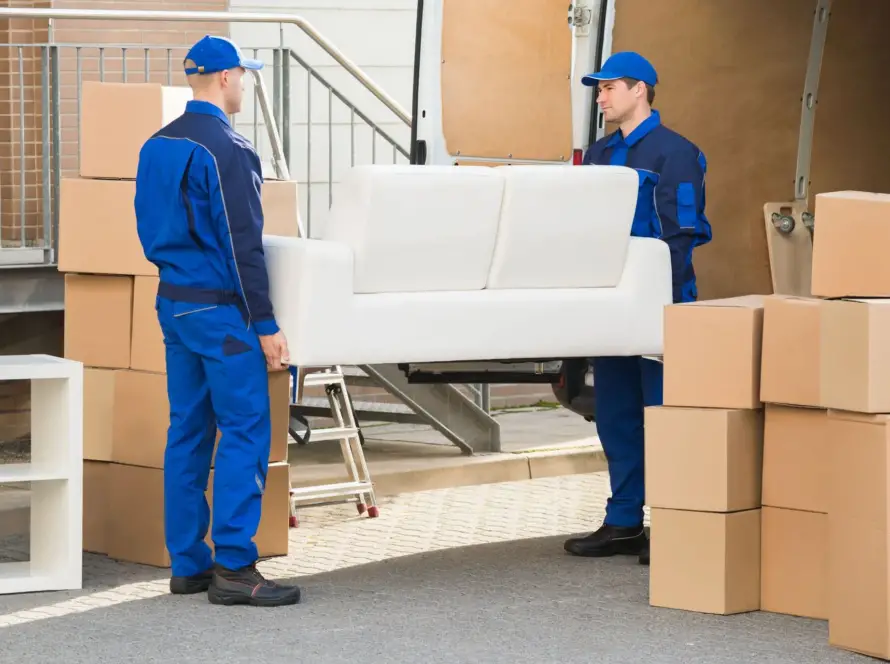
Moving is stressful for humans who understand what’s happening. For pets, it’s a series of incomprehensible events — strangers in the home, furniture disappearing, familiar smells vanishing, and then a car ride to somewhere completely new. Without a plan for managing your pets through a Rhode Island relocation, you’re adding a layer of stress to moving day that affects everyone, including the animals.
The good news is that pets adapt to new environments faster than most owners expect — and the steps that help them through the transition are also the steps that make moving day significantly more manageable for the people involved.
Before the Move: Prepare Your Pet for the Disruption
The weeks before a move bring visible changes to a home — boxes appearing, furniture being shifted, routines disrupted. Dogs in particular are attuned to these environmental signals and may begin showing stress behaviors before moving day arrives.
A few things that help during the pre-move period:
Maintain routines as much as possible. Feeding times, walk schedules, and play times should stay as consistent as possible despite the disruption. Routine is the primary anchor of a pet’s sense of security, and maintaining it signals that the fundamentals of their life haven’t changed even when the environment has.
Let pets investigate packing materials and boxes. Rather than keeping packing activity away from pets, allowing them to investigate the new items in their environment reduces the novelty factor. A cat that has sniffed every moving box is less alarmed by them than one that wasn’t allowed near them.
Update identification. Before moving day, make sure your pet’s ID tags carry your current contact information or, if you’re mid-move, your cell phone number. This is the window during which pets are most likely to get loose, and current contact info on the tag is the fastest path to recovery if it happens.
Moving Day: Keep Pets Away From the Action
The most practical advice for moving day is also the most commonly ignored: get your pets out of the house before the crew arrives and keep them out until the truck is loaded and gone.
Moving day is a scenario perfectly designed to stress animals and create safety risks. Doors are open repeatedly for extended periods. Strangers are moving through the home carrying large objects. The furniture that defined the territory is disappearing. The combination of open doors and a disoriented pet is the most common scenario for a pet going missing on moving day in Rhode Island.
Options for keeping pets safe on moving day:
Board them for the day. A kennel or doggy daycare takes them completely out of the equation. This is the cleanest solution for dogs especially.
Have a friend or family member take them. A trusted person your pet knows can take them for the day and bring them to the new home once the truck is unloaded and the environment is settled.
Confine them to a single room. If the above options aren’t available, designate a room that will be packed and cleared first, then use it as a quiet retreat for your pet during the move — with a sign on the door telling the crew not to open it. Provide water, familiar bedding, and something that smells like you.
Economy Movers’ residential crews are experienced with this situation and work efficiently to minimize the time your home is in active moving mode — which minimizes the stress window for everyone, including pets.
Transporting Pets to the New Home
For most Rhode Island moves, pet transportation is straightforward — a short car ride to a destination that’s nearby. A few things worth doing:
- Transport pets in their own carrier or crate rather than loose in a vehicle, even for a short distance. A disoriented animal in a moving car is a safety risk.
- Bring familiar bedding into the carrier. Scent is the most powerful environmental signal for both dogs and cats, and familiar smells in an unfamiliar space reduce anxiety.
- Don’t feed pets for a few hours before transport if they’re prone to car sickness.
- For cats specifically, keep the carrier covered with a light cloth during transport — reduced visual stimulation lowers stress.
For longer moves — if you’re relocating out of state and driving a significant distance — plan pet rest stops, water breaks, and appropriate containment for the full journey. Most interstate moves from Rhode Island to nearby New England states involve drives short enough that this isn’t a major challenge.
Settling Pets Into the New Home
The arrival at the new home is where most owners make a well-intentioned mistake: they let the pet out to explore immediately. This can be overwhelming for anxious animals, particularly cats, who prefer to establish a territory gradually rather than all at once.
A better approach:
Set up one room first. A bedroom or quiet room with familiar bedding, food and water bowls, litter box (for cats), and familiar-smelling items is the right starting point. Let your pet settle in that room while the rest of the home is established around them.
Introduce the new space gradually. Once the initial chaos of moving in has settled, allow supervised exploration of other rooms one at a time. Cats especially will take a few days to feel comfortable in a new environment — this is normal and doesn’t indicate a problem.
Maintain routines. The same principle that applies pre-move applies post-move. Consistent feeding, walking, and play schedules signal normalcy faster than any other single intervention.
If you’re using storage during your move and your timeline involves a gap between leaving one home and settling into another, make sure your pet’s essential items travel with you personally rather than going into storage — their bed, their bowls, their carrier, their familiar toys. These items matter more to your pet’s adjustment than you might expect.
Request a free estimate from Economy Movers for your Rhode Island relocation and let the team know you have pets — even simple logistics like which room to clear and pack first can make a real difference in how moving day goes for your animals.